Health and Safety Policy for Lawn Mowing Operations
 Purpose: This lawn mowing safety policy sets out clear expectations and practical measures to protect workers, householders, and the public during grass cutting and lawn care activities. It outlines safe systems of work for lawn mowing, grass cutting, and garden mower operations, emphasising hazard awareness, risk control and continuous improvement. The aim is to prevent injury, reduce incidents, and ensure that all mowing and turf maintenance tasks are done with respect for health and environmental safety.
Scope: This policy applies to all personnel involved in mowing, edging, clearing clippings and associated tasks. It covers hand-held rotary mowers, ride-on mowers, strimmers, trimmers, and ancillary equipment. The approach promotes safe use of lawn equipment, the maintenance of safe work areas, and effective supervision. Activities range from routine domestic lawn maintenance to commercial groundskeeping and landscaped area management.
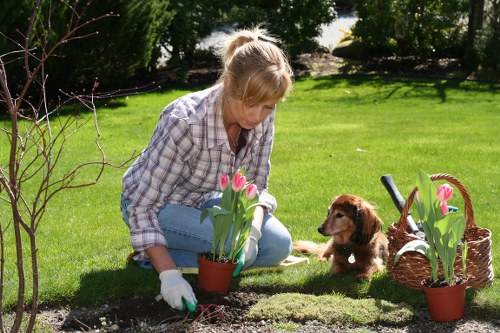 Principles: The policy is founded on a hierarchy of control: eliminate or reduce hazards where possible, substitute hazardous practices, apply engineering and administrative controls, and require PPE. Core principles include risk assessment before work begins, pre-start checks on machinery, safe handling and refuelling procedures, and clear exclusion zones to protect bystanders and pets during mowing operations.
Roles and Responsibilities
Employers and supervisors must ensure that safe equipment is provided and that operators receive appropriate instruction and supervision. This includes routine inspection and servicing of mowers and power tools, replacement of guards, and clear record-keeping for maintenance. Managers should ensure that operatives understand lawn mower safety protocols and that competent personnel are assigned to high-risk tasks such as slope mowing or mechanical repairs.
 Operators and workers are responsible for following safe work procedures, wearing the required protective equipment, and reporting defects or near misses. Operators must perform pre-use checks, confirm that safety interlocks and shielding are functional, and stop work to address any unsafe condition. Training should cover cutting technique, safe starting/stopping, reversing visibility, and the safe use of attachments.
Contractors and third parties
When external contractors are engaged for lawn care, they must demonstrate competence, provide evidence of training, and comply with the host safety arrangements. A simple written work plan or method statement for complex jobs (for example, steep slopes or areas with significant pedestrian traffic) helps align expectations and control measures.Risk assessment and control measures focus on common hazards associated with grass cutting: flying debris, manual handling, vibration, noise, fuel hazards, slips and trips, mechanical failure, and collisions with people or property. Controls include guarding, use of spark arrestors where needed, barriers and warning notices, regular maintenance schedules, and careful planning of work sequences to reduce exposure to risk.
Personal protective equipment should be selected to match the hazards. Typical items include robust footwear with ankle support, eye protection, hearing protection for noisy equipment, gloves, long trousers, and hi-visibility clothing where appropriate. PPE is a final layer of protection and must be worn correctly, maintained, and replaced when damaged.
Safe operating procedures for mowing tasks should include a pre-start walkover to remove obstacles, clearing small stones and toys, and marking hidden hazards. Where possible, grass should be cut when dry to minimise slipping and clumping. For equipment safety, isolate power before adjusting blades, use approved tools for maintenance, and never bypass safety devices or guards.
 Emergency preparedness and first aid arrangements are essential. Supervisors should ensure that adequate first aid provision is available, that staff know emergency contacts and procedures for incidents such as lacerations or crush injuries, and that clear instructions exist for summoning help. Incident reporting and investigation help prevent reoccurrence and contribute to using lessons learned to update safe work methods.
Training, supervision and competence verification form a continuous cycle of improvement for mowing and turf maintenance. Training should be practical and include safe startup/shutdown, handling of hazardous substances (fuels/oils), and working on slopes. Refresher training and toolbox talks keep safety front of mind and address seasonal risks or new equipment types.
![A close-up view of a person’s hand using a pair of garden pruning shears with orange and black handles to trim a green hedge or shrub in a well-maintained garden. The surrounding garden area features dense, lush green foliage, including leafy plants and bushes, with a mix of textures and shades of green. In the background, there may be other garden elements such as grass or additional plants, indicating an outdoor space designed for landscaping. The lighting appears natural, suggesting a bright, possibly sunny day, emphasizing the health and vibrancy of the garden. The scene reflects professional gardening practices, possibly by a service like Lawn Mowing, with a focus on hedge trimming and garden maintenance in a typical UK garden setting, potentially in or near towns like [TOWN] or in the [POSTCODE] area, aligning with local landscaping and gardening services.](/pub/_photos/gardening/f1757731536.jpg) Monitoring and review: performance is monitored using inspections, maintenance records, and reviews of incident data. Safety performance indicators may include defect closure times, near-miss reports, and outcomes of toolbox sessions. The policy is reviewed periodically to incorporate new equipment standards, improved PPE options, or changes in operational scope. Continuous improvement and worker involvement remain central to reducing harm during lawn maintenance.
Monitoring and review: performance is monitored using inspections, maintenance records, and reviews of incident data. Safety performance indicators may include defect closure times, near-miss reports, and outcomes of toolbox sessions. The policy is reviewed periodically to incorporate new equipment standards, improved PPE options, or changes in operational scope. Continuous improvement and worker involvement remain central to reducing harm during lawn maintenance.
Additional practical measures for stronger protection include planning work to avoid public footfall, using mechanical collection systems where practical to reduce manual clearing, and ensuring fuel is stored and handled safely. For ride-on mowers and heavy machines, roll-over protection and seat belts are recommended, along with safe loading procedures for transport between sites.
Conclusion: A robust grass cutting safety policy emphasises prevention, clear responsibilities, appropriate training, and effective controls. By combining good planning, maintained equipment, suitable PPE, and engaged supervision, teams can manage the risks of lawn mowing and grounds maintenance while protecting people and property.
Commitment: All personnel are expected to follow this policy and contribute to a culture of safety. Regular review and open communication ensure that mowing operations remain safe, practical and sustainable.