Recycling and Sustainability for Lawn Mowing Services
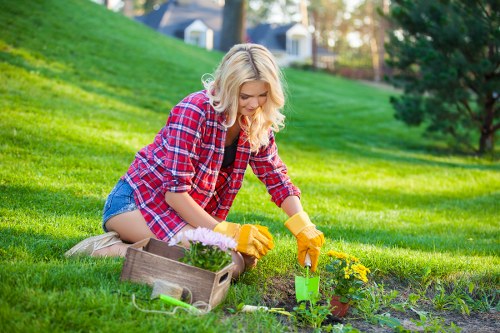 Our commitment to sustainable lawn mowing practices is founded on clear targets and measurable actions. We set a recycling percentage target of 75% for all green waste and associated materials diverted from landfill by the end of the third operational year. That target reflects a balanced, ambitious aim for urban and suburban lawncare mowing operations, accounting for seasonal peaks in grass clippings, pruning waste and leaf collection. By combining best practice grass cutting service methods with community-focused recycling, we reduce emissions and conserve resources.
To meet that 75% diversion goal we deploy operational strategies across every job. Fleet scheduling reduces empty miles, and our crews apply source separation on-site so grass clippings, woody prunings and inorganic litter are segregated before transport. Low-carbon vans and route optimization software are integral to our model; they reduce fuel consumption while enabling more frequent pickups of separated green material. This mix of technology and crew training supports consistent delivery of our residential lawn mowing and commercial grass-cutting services.
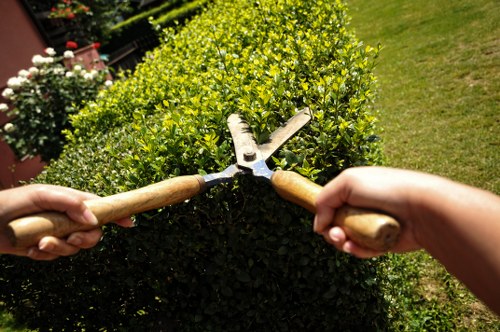 Partnerships with local charities and community groups are central to our approach. We work with community gardens, urban farms and food-growing cooperatives to donate compostable materials once processed. Typical redistribution pathways include:
- Mulch and woodchip for community allotments and park planting
- Composted grass clippings and leaf mold for soil improvement projects
- Reusable woody stems and brush sent to social enterprises that upcycle biomass
Local transfer stations and borough recycling practices
We coordinate with municipal transfer stations and civic amenity sites in the region to ensure smooth handover of sorted materials. In many boroughs the council-run transfer facilities accept segregated green waste streams, making it easier to funnel materials into anaerobic digestion, commercial composting or biomass chipping facilities. Some boroughs operate dual-stream waste collection (organic/green separate from dry recycling) while others use combined organics systems; our crews adapt to local borough approaches to waste separation so that recovered material meets facility acceptance criteria.
![A woman wearing teal gardening gloves and a dark green apron is kneeling on a garden path, tending to a flower bed filled with vibrant red flowering plants. She is holding a small, hand-held garden fork, carefully working among the plants. The garden features a well-maintained lawn area with neatly edged borders, lush green shrubs, and various plants and flowers, with a brick wall in the background indicating a residential setting. Sunlight illuminates the scene, suggesting a clear day that highlights the natural textures of the soil, foliage, and flowering plants. The surrounding environment appears orderly and thoughtfully landscaped, indicative of professional gardening services in an outdoor space typical of a suburban garden in the UK, possibly near [POSTCODE], [TOWN]. This scene demonstrates routine garden maintenance, such as planting, weeding, or bed tending, consistent with services offered by Lawn Mowing in the gardening category, aligned with sustainability and outdoor care initiatives documented on the Recycling and Sustainability page.](/pub/_photos/gardening/f1399832576.jpg) Processing pathways vary by locality and by material type. Where municipal composting is available, we deliver source-separated clippings directly to those sites; where only municipal green waste chipping is offered, we supply raw biomass for mulch. Through contractual agreements with transfer stations we ensure traceability of materials from initial lawncare mowing pickup to final processing. This transparency helps us report the volume of diverted material that contributes to our recycling percentage target each quarter.
Processing pathways vary by locality and by material type. Where municipal composting is available, we deliver source-separated clippings directly to those sites; where only municipal green waste chipping is offered, we supply raw biomass for mulch. Through contractual agreements with transfer stations we ensure traceability of materials from initial lawncare mowing pickup to final processing. This transparency helps us report the volume of diverted material that contributes to our recycling percentage target each quarter.
Measurement and continuous improvement are embedded in our operations. We record tons of green waste collected, tons delivered to composters or wood processors, and tons redistributed to charities. Those numbers feed into a public-facing sustainability dashboard and internal performance reviews. Audits with partners help us fine-tune separation practices, enhance training for crews and identify opportunities to increase the proportion of material recycled rather than disposed.
Community partnerships, low-carbon fleet and responsible disposal
Community partnerships multiply the benefits of responsible grass cutting and lawn maintenance. We collaborate with local food banks, neighborhood planting projects and charities focused on urban greening: garden groups receive mulch, schools get compost for growing projects, and social enterprises gain feedstock for small-scale biomass initiatives. These relationships are formalized through memoranda of understanding that prioritize consistent, safe transfers and joint outreach to raise awareness about proper waste separation at source.
![A close-up of a small garden scene showcasing a white picket fence with a background of blurred green foliage and sky. In the foreground, there is a lush, well-maintained grassy lawn with dense, vibrant green grass blades. To the right of the image, bright yellow daffodils with long, slender green stems and leaves are blooming next to the fence, adding a splash of colour. On the left, a white daisy with a yellow centre is also present next to the fence. Leaning against the fence are two gardening tools — a trowel and a hand rake — both with wooden handles, indicating recent gardening activity. The scene is illuminated by natural sunlight, suggesting a clear, pleasant day, and the overall composition reflects a tidy, inviting outdoor space that could be part of a front or back garden within the vicinity of [POSTCODE] in [TOWN], ideal for lawn care and gardening services provided by Lawn Mowing in alignment with sustainable gardening practices.](/pub/_photos/gardening/f1389109096.jpg) A key element in lowering our operational carbon footprint is the gradual replacement of petrol vans with low-emission vehicles. Our low-carbon vans fleet includes hybrid vehicles and dedicated electric vans for short urban routes. The shift reduces tailpipe emissions and supports quieter, cleaner service within densely populated boroughs. Combined with route planning and load consolidation, these vehicles help deliver measurable reductions in CO2 per job completed???often achieving a 30???50% cut in operational emissions on electrified routes.
A key element in lowering our operational carbon footprint is the gradual replacement of petrol vans with low-emission vehicles. Our low-carbon vans fleet includes hybrid vehicles and dedicated electric vans for short urban routes. The shift reduces tailpipe emissions and supports quieter, cleaner service within densely populated boroughs. Combined with route planning and load consolidation, these vehicles help deliver measurable reductions in CO2 per job completed???often achieving a 30???50% cut in operational emissions on electrified routes.
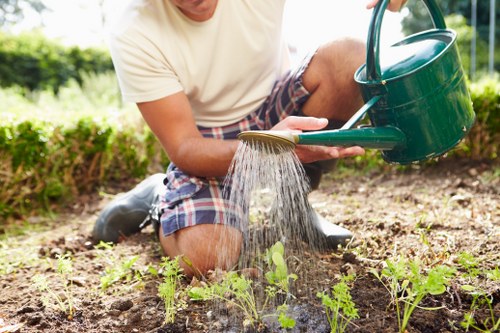 In summary, our integrated approach to sustainable lawn services combines clear recycling targets, partnerships with charities and community groups, close working arrangements with local transfer stations, and investment in low-carbon vans. By using source separation, supporting municipal composting schemes, and donating processed materials to community projects, our residential and commercial mowing services turn routine maintenance into a circular resource flow. We continue to monitor performance, adapt to borough-level recycling rules and seek new ways to increase the proportion of material that is reused or composted rather than landfilled, advancing greener grass cutting and lawn care across the neighborhoods we serve.